Explicit & Systematic
Every lesson is intentional. Skills are taught directly, sequentially, and with the right level of scaffolding for each learner. I never assume prior knowledge.
Science of Reading · Orton-Gillingham · K–5 · New York
Specialized literacy tutoring for students with dyslexia, language processing differences, and reading challenges — rooted in decades of research, and tailored to your child's unique profile.
M.S.Ed. · Bank Street College · NY State Certified · IMSE Orton-Gillingham · AIM Institute · 10+ Years
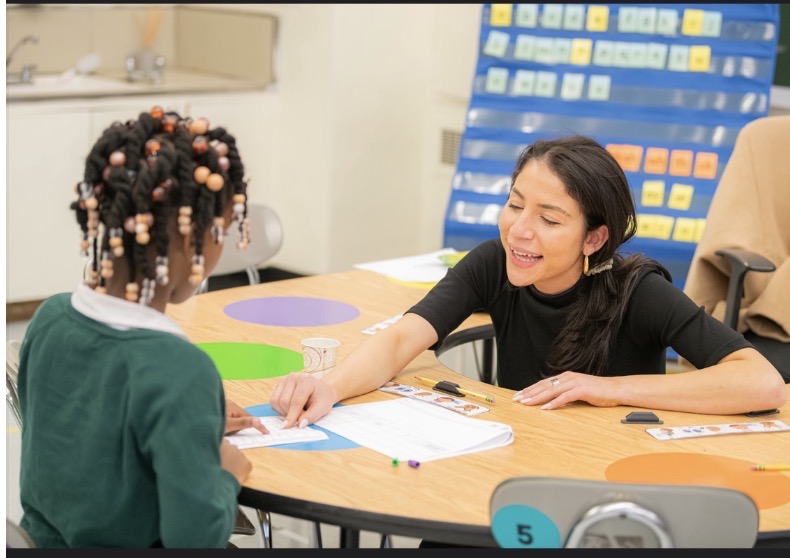

Laura Gabow, M.S. Ed.
NY State Certified · IMSE Orton-Gillingham
I am a dedicated K–5 literacy specialist with over ten years of experience working with children with language and learning variations. I hold a Master of Science in Education from Bank Street College of Education (4.0 GPA) — one of the nation's most rigorous graduate programs for child-centered learning — and a Bachelor of Science in Inclusive Elementary & Special Education from Syracuse University, alongside New York State certifications in Literacy, Special Education, and Childhood Education.
My instruction is deeply rooted in the Science of Reading. I am trained through the IMSE (Institute for Multi-Sensory Education) in Orton-Gillingham methodology with fidelity certification, and have completed the AIM Institute's Pathways to Proficient Reading professional development. These are not credentials I collect — they are frameworks I actively apply in every session.
Beyond foundational decoding, I specialize in helping students bridge the gap between word recognition and deep comprehension — empowering learners to move past frustration, build lasting skills, and discover what it feels like to love reading.
The Science of Reading is not a program or a fad — it is the cumulative body of research from cognitive science, linguistics, and education that tells us how the brain learns to read. My instruction is built on these evidence-based foundations.
The Goal
Reading Comprehension
The ultimate aim — understanding what is read with accuracy and fluency.
Strand 1
Decoding
Phonological awareness, phonics, word recognition — the ability to translate print to sound.
Strand 2
Language Comprehension
Vocabulary, syntax, background knowledge, verbal reasoning — what the reader brings to the text.
The Simple View of Reading — Gough & Tunmer (1986) · Scarborough's Reading Rope (2001)
Phonological Awareness
The ability to hear, identify, and manipulate sounds in spoken language — the bedrock of decoding. Includes rhyme, syllable segmentation, and phoneme manipulation.
Phonics & Word Study
Explicit, systematic instruction in the alphabetic code — grapheme-phoneme correspondences, syllable patterns, morphology, and spelling rules taught in a logical sequence.
Fluency
Reading with accuracy, appropriate rate, and expression. Fluency frees cognitive capacity so the reader can focus on meaning rather than decoding individual words.
Vocabulary
Deep knowledge of word meanings — including morphological analysis (roots, prefixes, suffixes) — which is essential for comprehension and academic language development.
Reading Comprehension
Active strategies for constructing meaning: inference, visualization, text structure awareness, summarizing, and monitoring for understanding.
Written Language
Reading and writing are deeply connected. Composition, spelling, sentence-level grammar, and handwriting reinforce and extend the same neural pathways that support reading.
The Gabow Literacy Acquisition Framework
Every session and consultation runs on a single, coherent plan — the structure that turns the Science of Reading into a day-by-day method. Eight guiding principles, a structured daily block, and a clear K–2 progression, gathered in one place for families and schools.
Explore the Full FrameworkEach lesson is intentional, individualized, and structured — but never rigid. I meet each student where they are, every single time.
Every lesson is intentional. Skills are taught directly, sequentially, and with the right level of scaffolding for each learner. I never assume prior knowledge.
Orton-Gillingham methodology engages visual, auditory, and kinesthetic pathways simultaneously — meeting students where their brains are and building durable memory.
Regular informal assessment and progress monitoring ensure instruction adapts to each student's evolving needs — not a fixed curriculum on a fixed schedule.
Decoding is the foundation — but the goal is understanding. I build word recognition and language comprehension in tandem, from phoneme to paragraph.
Every child has strengths. I start there — building confidence and momentum before tackling the hard stuff. Reading frustration is real; I work to dismantle it.
Parents are not bystanders. I keep families informed, explain what we're working on and why, and equip you with simple strategies to reinforce learning at home.
My students range from children with diagnosed learning differences to typical learners who simply haven't unlocked reading yet. If your child is struggling, there is a reason — and a path forward.
Students with Dyslexia
Dyslexia is a phonological processing difference — not an intelligence issue. Orton-Gillingham was specifically designed for dyslexic learners and is the gold standard intervention endorsed by the International Dyslexia Association.
Language Processing Differences
Children with auditory processing disorders, language delays, or mixed receptive-expressive language differences benefit from the explicit, multisensory scaffolding at the heart of my approach.
Students with IEPs & 504 Plans
I work closely with IEP and 504 goals, provide written progress documentation, and can consult with school teams. Tutoring that aligns with your child's school plan is far more effective than tutoring in isolation.
Struggling Readers (K–5)
Many children who haven't been formally diagnosed are still reading significantly below grade level. Structured, explicit instruction accelerates growth for any student who hasn't cracked the code with whole-language or leveled-reader approaches.
Comprehension Challenges
Some students can decode accurately but struggle to make meaning from text. I address the language comprehension strand directly — vocabulary, inference, text structure, and verbal reasoning — not just decoding.
Early Intervention (PreK–K)
The earlier, the better. Phonological awareness and print concepts are foundational. Early targeted support prevents the compounding reading gap that widens significantly by third grade.
Writers in Grades 3–9
Writing support for all writers in grades 3–9. From sentence structure and paragraph organization to essays and longer compositions, I help students develop clear, confident written expression — connecting the reading and writing skills that reinforce one another.
Students Who Would Benefit from Enrichment
Not every learner who needs more is struggling. Students who are ready for greater challenge — including gifted and twice-exceptional learners — benefit from enrichment that deepens reading, writing, and thinking beyond grade-level expectations.
Not sure? A free consultation is the best place to start — no pressure, no commitment.
Individualized support for every stage of your child's reading journey — from assessment through ongoing instruction and family coaching.
The core of my practice. Each session is individualized to your child's specific literacy profile — not a packaged curriculum applied universally. I draw from IMSE Orton-Gillingham methodology with fidelity, meaning every lesson includes warm-up phonological drills, phonics instruction, word work, fluency practice, and passage reading, adjusted dynamically as your child progresses. Ideal for students with dyslexia, reading delays, IEPs, or anyone who needs structured, explicit instruction.
Before we can make a plan, we need a clear picture. My comprehensive informal literacy assessment spans 1–2 sessions and examines phonological awareness, phonics knowledge, decoding and encoding patterns, fluency, vocabulary, and reading comprehension. You receive a detailed written summary with specific findings and a targeted action plan — a road map you can use with tutors, teachers, and specialists alike. This is not a formal diagnostic evaluation, but it is far more actionable for instructional planning.
Informed parents are the most powerful advocates for their children. These sessions help you understand the Science of Reading, demystify your child's specific learning profile, and equip you with practical strategies to support reading at home. We can also work through IEP literacy goals together, discuss what to ask for in school meetings, or simply help you feel less alone in navigating this process.
Bridging the gap between home support and school instruction. I can review your child's current school literacy program, advise on IEP literacy accommodations and goals, attend CSE meetings with families, or consult with classroom teachers and reading specialists. Many families find that alignment between tutoring and school instruction dramatically accelerates their child's progress.
For schools and administrators ready to take the Science of Reading seriously. Using the Gabow Literacy Acquisition Framework as the benchmark, I evaluate a school's literacy block end to end — instructional time, sequence and scope, screening and progress-monitoring practices, intervention tiers, and curriculum alignment — then deliver a clear compliance report with prioritized, research-based recommendations. A rigorous outside check for the literacy expertise many buildings are missing.
Whether you're navigating a school change, seeking specialized support, or making long-term academic plans for your child, I am here to offer expert, deeply personalized guidance every step of the way.
I support families facing questions like:
Our consultants bring decades of experience in classroom teaching, student support services, and educational leadership at school, state, and federal levels. We work closely with families to understand each child's strengths, needs, and goals—then develop a tailored path forward that aligns with your family's values and priorities.
When you sit across the table from a school team, who is beside you matters. Here is what I bring that families tell me they can feel from the very first conversation.
My own ADHD gives me an insider understanding of what it's like to navigate systems that weren't designed for you. That isn't something you can learn from a textbook — and families feel it immediately when they're talking to someone who genuinely gets it.
I walked away from classroom teaching because advocating for the rights of children with special needs was treated as pushback. Advocates have to be willing to push back against institutions — and I have already proven that I will.
A decade of direct work in NYC public schools, across multiple buildings and populations, means I understand how IEPs actually function (or don't), how evaluations get interpreted, how teachers and administrators think, and where families get steamrolled. That institutional knowledge is invaluable when you're at the table with a school team.
My empathy isn't just a personality trait — it has been shaped by real experience with difficult systems, difficult institutions, and caring deeply about outcomes for vulnerable people.
Even with strong laws, many families in New York face problems when seeking special education services. As an advocate, I step in to make sure students receive fair treatment and that schools meet their responsibilities under the law.
Some schools refuse or delay evaluations, which keeps children from getting help quickly. When evaluations are delayed, students fall further behind and have farther to catch up. I work with parents to ensure evaluations happen on time, follow every timeline under the law, and produce fair assessments for every child.
Many IEPs and 504 Plans lack clear goals or the right services. I review these plans carefully to make sure they meet a child's unique needs, help parents understand what an effective plan should include, and request changes when needed so students receive the full support required for long-term success.
When parents and schools disagree about placement, I help families push for settings that provide proper support and an appropriate education in line with the law. Decisions should be based on the child's individual needs — not convenience or budget — and should honor the Least Restrictive Environment (LRE) rule that keeps children learning alongside their peers whenever possible.
If a school fails to provide a Free Appropriate Public Education, I help parents file complaints or seek legal representation to fix the issue. I review every document — IEPs, progress reports, and evaluations — to find exactly where the system failed.
I work closely with families to hold schools accountable and make sure every child gets the quality education they are promised under federal and New York law.
If your child is struggling and the school keeps delaying, minimizing, or "waiting and seeing," you don't need more meetings — you need a plan that creates accountability and measurable change.
Parents come to me when they know their child needs help but the school says they don't qualify; when an evaluation feels incomplete or biased and the conclusions don't match what they see every day; when the IEP exists on paper but progress is flat and it feels meaningless; and when they are exhausted from fighting for the basics while their child loses time they can't get back. You are not overreacting. When eligibility and evaluations are wrong, everything downstream is wrong.
My goal is to move you from uncertainty to a clear, evidence-driven path. That looks like:
A curated library of trusted organizations, legal references, and local supports for families navigating special education, learning differences, giftedness, and beyond. These resources offer important foundational information — but families often benefit from individualized guidance to apply them effectively.
Special education and IEP law were generally developed first at the federal level and then at the state level. If there is ever a conflict between state and federal law, federal law must be followed.
These resources provide important foundational information; however, families often benefit from individualized guidance to understand program availability, identify appropriate placements, and navigate challenges that may arise during the CPSE process.
Region 3 Districts 25, 26, 28, 29
30-48 Linden Place, Queens, NY 11354
(718) 281-7575or 90-27 Sutphin Blvd., Queens, NY 11435
(718) 557-2600Region 5 Districts 19, 23, 27
82-01 Rockaway Blvd., Queens, NY 11416
(718) 642-5800or 1655 St. Mark's Avenue, Brooklyn, NY 11233
(718) 922-4960Region 7 Districts 20, 21, 31
415 89th Street, Brooklyn, NY 11209
(718) 759-4900or 715 Ocean Terrace, Staten Island, NY 10301
(718) 556-8350Students with physical, neurological, and medically complex conditions may require specialized educational accommodations, related services, assistive technology, nursing support, transportation accommodations, accessibility planning, and transition services.
From your first message to your child's first breakthrough — here is how we work together.
We start with a 30-minute phone or video call. Tell me about your child — their grade, their reading challenges, what you've already tried, and what you're hoping for. I'll share whether I think we're a good fit and what I'd recommend as a next step. No pressure, no sales pitch.
30 minutes · Free · No commitmentBefore instruction begins, I need to understand your child's specific literacy profile. Over 1–2 sessions, I administer a range of informal assessments across phonological awareness, phonics, fluency, vocabulary, and comprehension. This tells me exactly where to start — not at grade level, but at the right level.
1–2 sessions · Includes written reportBased on assessment findings, I build an individualized plan that targets your child's specific skill gaps in an evidence-based sequence. I share this with you in plain language, connected to any existing IEP goals, and explain what mastery at each level looks like.
Shared with family · Aligned to IEP when applicableEach Orton-Gillingham session follows a consistent structure: phonological drills, phonics review and new instruction, word work (decoding and encoding), fluency practice, and connected passage reading. Consistency matters — twice-weekly sessions produce faster results for most students, particularly those with significant gaps.
45–60 min · In-person or virtual · Once or twice weeklyI conduct informal progress monitoring regularly and share updates with families — what your child has mastered, what we're working on next, and how they're growing. You are never left wondering whether it's working. I also share simple home activities that reinforce what we're building in sessions.
Monthly progress summaries · Home strategy guidesThe science of reading isn't new. The research has been settled for decades. What's still catching up is implementation — and that's the work I'm most passionate about.
"Laura changed my daughter's relationship with reading. Before working with her, my daughter cried every time we opened a book. Six months later, she's reading chapter books by choice. Laura's patience and expertise made all the difference."
— Parent of a 2nd-grade student with dyslexia
"What sets Laura apart is how much she understands the science. She could explain exactly why my son was struggling and exactly what we needed to do about it. His school had been telling us to 'wait and see' for two years. Laura got him moving in six weeks."
— Parent of a 3rd-grade student with an IEP
"Laura's assessment was the first time anyone actually mapped out what my child could and couldn't do. The written report she gave us opened doors in our school meeting that we'd been unable to open for years."
— Parent of a 1st-grade student
"I contacted Laura when I was having some issues with my son's school, which made me worry about his upcoming IEP meeting. I had a consultation with Laura the next day. Laura gave me the opportunity to share all of my concerns without judgment, and she flagged 7 issues I had expressed to the school in writing that were all ignored. Laura immediately drafted an email for me to send to my son's teacher and administrators to obtain a copy of his drafted IEP, and kindly asked me for a copy of my child's most recent IEP. Twenty minutes later, she had revised the draft to ensure it was complete. When Laura represented us at our review meeting, I was completely at ease. Not only did the district agree to what they had refused to agree to before we hired Laura, but they agreed to everything else we asked for. Laura's experience on both sides of the table — as a Special Education teacher and parent advocate — was instrumental. She is humble, relatable, and knowledgeable. Laura is a master in her craft."
— Megan D., Scarsdale, NY
Answers to what parents ask most often before we work together.
The Science of Reading (SOR) is the comprehensive body of research — from cognitive neuroscience, psychology, linguistics, and education — that tells us how the brain learns to read. Decades of research converge on a clear finding: most children learn to read best through structured, explicit, systematic phonics instruction, not through guessing from context or exposure to "leveled" books.
The SOR has strong implications for instruction. Methods like balanced literacy and three-cueing (using pictures, context, or word shape to guess at words) are not supported by evidence and actively interfere with the development of accurate decoding. Every lesson I teach is grounded in what the research actually says.
Orton-Gillingham (OG) is a structured, multisensory, explicit, and systematic approach to literacy instruction developed in the 1930s by neurologist Samuel Orton and educator Anna Gillingham. It is widely regarded as the gold standard intervention for students with dyslexia and reading difficulties, and is endorsed by the International Dyslexia Association.
OG differs from general tutoring in that it is diagnostic and prescriptive — instruction is driven by what each individual student knows and doesn't yet know. It is also deeply sequential: concepts are introduced in a specific order, each building on the last, with no gaps. I am trained through IMSE (Institute for Multi-Sensory Education) with fidelity certification, meaning my sessions follow the approach with rigor, not loosely.
No. Many of my students do not have a formal diagnosis. If your child is struggling to read — regardless of label — structured, evidence-based instruction is likely to help. My informal literacy assessment will give us a clear instructional picture regardless of whether a psycho-educational evaluation has been completed.
That said, if you suspect dyslexia or another learning difference, I am happy to discuss whether a formal evaluation might be worth pursuing and can point you toward resources.
An OG session follows a consistent structure, which is itself a key feature of the approach — consistency reduces cognitive load for the student, letting them focus on the content rather than the format.
A typical 45–60 minute session includes: (1) phonological awareness warm-up drills, (2) review of previously taught phonics concepts, (3) introduction of a new phonics concept with explicit teaching, (4) word-level practice — decoding (reading) and encoding (spelling), (5) fluency work with connected text, and (6) passage reading with comprehension discussion. The exact balance shifts based on each child's needs on that day.
There is no honest one-size-fits-all answer to this. It depends on the size of the skill gap, the frequency of sessions, how much practice happens at home, and the child's specific learning profile. I am transparent about this from the start.
What I can say: students who come twice a week consistently typically progress significantly faster than those who come once a week. Most families see meaningful gains within 3–6 months of consistent, twice-weekly work. Progress monitoring every 6–8 weeks gives us concrete data to assess growth.
Yes. I offer both in-person sessions in New York and fully virtual sessions via video. OG instruction translates well to virtual delivery — I use digital manipulatives, shared screen tools, and structured materials that maintain the multisensory experience online. Many families find virtual sessions more convenient and just as effective.
For very young children (PreK–K) or those with significant attentional challenges, in-person is often preferred, but we can discuss what's right for your child.
I believe tutoring is most effective when it is not siloed from the school environment. With family permission, I am happy to communicate with classroom teachers, reading specialists, and special education teams. I can also attend IEP/CSE meetings as a family advocate, review current school literacy programs, and help you understand what to ask for in school planning meetings.
I provide written progress summaries that can be shared with schools to demonstrate growth and inform future service decisions.
Every child's reading journey is different. In a free consultation, we'll discuss your child's needs and how I can help — no pressure, no commitment.